

Tempat asal:
Cina
Nama merek:
RPS-SONIC
Sertifikasi:
CE, ISO
Nomor model:
RPS-SONO20-2 menjadi 1
Hubungi Kami
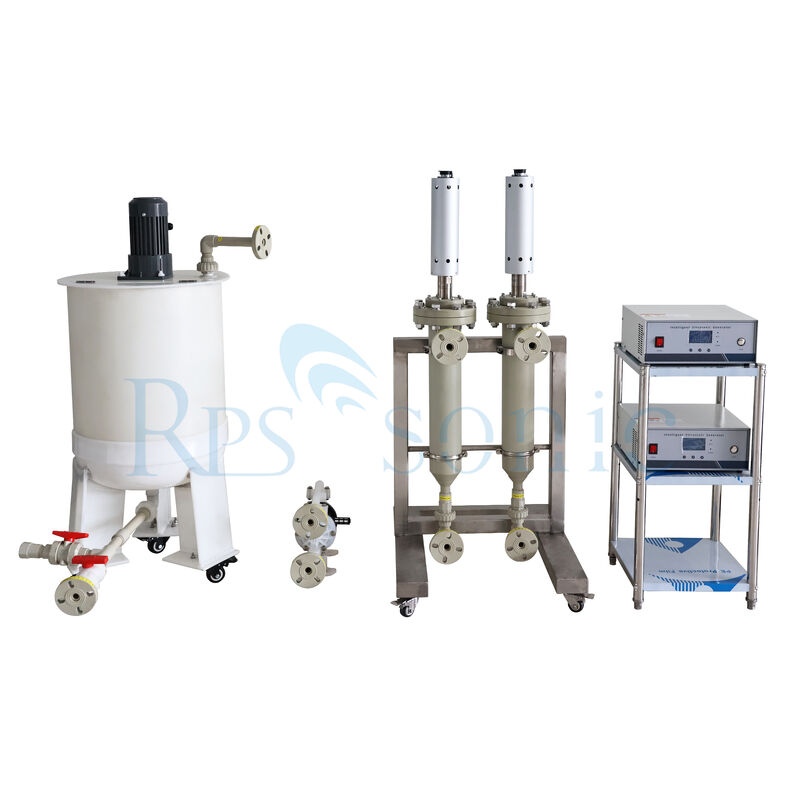
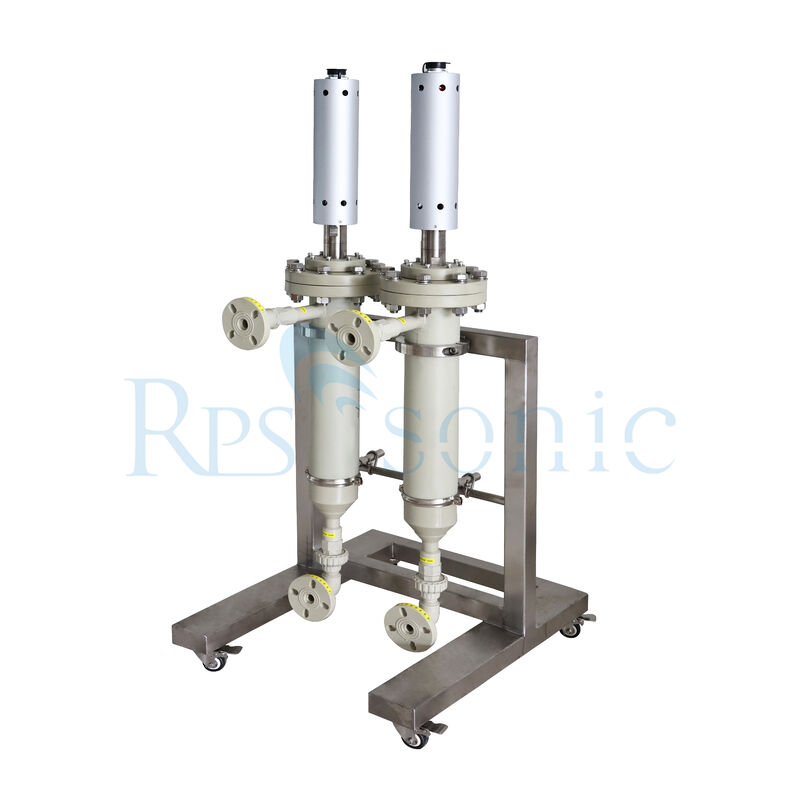
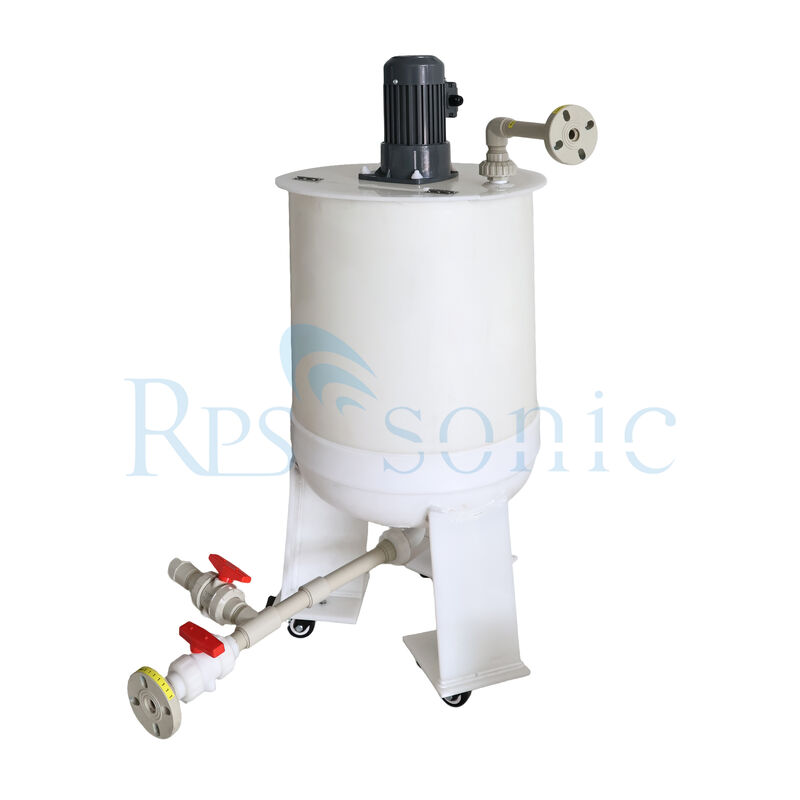

Mesin dispersi graphene ultrasonik bekerja terus-menerus mesin homogenizer ultrasonik
Mesin dispersi ultrasonik adalah perangkat yang menggunakan gelombang ultrasonik frekuensi tinggi untuk memecah partikel aglomerasi, mencampur cairan yang tidak bercampur, dan menciptakan suspensi atau emulsi yang stabil dan seragam.
Penjelasan sederhana:
Hal ini menggunakan kavitasi ultrasonik berupa gelembung kecil dan runtuh dengan keras dalam cairan menciptakan gelombang kejut yang kuat dan microjets yang:
Pisahkan partikel yang terakumulasi (graphene, tabung karbon, pigmen, nanomaterial)
Campurkan minyak dan air menjadi emulsi yang stabil
Taburkan bubuk secara merata ke dalam cairan tanpa sedimentasi
Penggunaan utama:
Dispersing graphene, CNTs, nanopartikel
Pembuatan tinta, pelapis, bubur baterai
Pembuatan emulsi dalam kosmetik, makanan
Struktur kunci:
Generator ultrasonik
Transduser (mengubah listrik menjadi getaran)
Probe / tanduk (menyampaikan getaran ke dalam cairan)
Parameter
| Model | SONO20-1000 | SONO20-2000 | SONO15-3000 | SONO20-3000 |
| Frekuensi | 20±0,5 KHz | 20±0,5 KHz | 15±0,5 KHz | 20±0,5 KHz |
| Kekuatan | 1000 W | 2000 W | 3000 W | 3000 W |
| Tegangan | 220/110V | 220/110V | 220/110V | 220/110V |
| Suhu | 300 °C | 300 °C | 300 °C | 300 °C |
| Tekanan | 35 MPa | 35 MPa | 35 MPa | 35 MPa |
| Intensitas suara | 20 W/cm2 | 40 W/cm2 | 60 W/cm2 | 60 W/cm2 |
| Kapasitas maksimum | 10 L/Min | 15 L/Min | 20 L/Min | 20 L/Min |
| Bahan kepala ujung | Paduan titanium | Paduan titanium | Paduan titanium | Paduan titanium |
Deskripsi
Bagaimana cara kerjanya (langkah demi langkah)?
Generator mesin menghasilkan energi listrik frekuensi tinggi (biasanya 20 kHz).
Energi ini dikirim ke transduser, yang mengubah listrik menjadi getaran mekanis berkecepatan tinggi.
Getaran diperkuat oleh tanduk / probe dan ditransmisikan ke cairan.
Di dalam cairan, kavitasi ultrasonik terjadi:
Jutaan gelembung kecil terbentuk
Mereka cepat tumbuh dan kemudian runtuh dengan ganas
Keruntuhan menciptakan:
Gelombang kejut yang kuat
Micro-jet berkecepatan tinggi
Kekuatan geser yang kuat
Kekuatan-kekuatan ini memecah partikel-partikel yang terkumpul (seperti graphene, pigmen, atau nanopartikel) dan mencampurnya secara merata ke dalam cairan.
Dispersi ultrasonik menggunakan kavitasi dari getaran frekuensi tinggi untuk secara fisik memecah gumpalan dan menciptakan campuran yang stabil dan seragam.
Dalam beberapa tahun terakhir, nanomaterial B telah banyak digunakan di berbagai industri untuk mengoptimalkan kinerja bahan.menambahkan cat graphene ke baterai dapat sangat memperpanjang umur layanan baterai, sementara menambahkan silikon oksida ke kaca dapat meningkatkan transparansi dan ketahanan kaca.
Konten inti dari nanoteknologi adalah bagaimana memecahkan masalah aglomerasi nanopartikel.sangat sulit untuk mendapatkan nanopartikel yang tersebar tunggalCara menyebarkan nanopartikel secara merata ke dalam matriks adalah teknologi kunci nanoteknologi.
Untuk mendapatkan nanopartikel yang sangat baik, dibutuhkan metode yang efektif.Area tekanan tinggi dan rendah ini terus bertabrakan satu sama lain untuk menghasilkan kekuatan geser yang kuatGelombang ultrasonik yang digunakan dalam dispersi nanomaterial umumnya membutuhkan tekanan suara yang relatif besar dan amplitudo ultrasonik.Jenis tanduk, yaitu, jenis probe, lebih umum digunakan saat ini.
Rekomendasi
1Jika Anda baru mengenal bahan nano dan ingin memahami efek dispersi ultrasonik, Anda dapat menggunakan bahan laboratorium 1000W / 1500W.
2Jika Anda adalah perusahaan kecil dan menengah yang menangani kurang dari 5 ton cairan per hari, Anda dapat memilih untuk menambahkan probe ultrasonik ke tangki reaksi.
3Jika itu adalah perusahaan besar yang perlu memproses lusinan atau bahkan ratusan ton cairan setiap hari, sistem sirkulasi ultrasonik eksternal diperlukan.Beberapa set peralatan ultrasonik dapat memproses sirkulasi pada saat yang sama untuk mencapai efek yang diinginkan.
Fitur
1Desain kepala alat fokus yang unik, konsentrasi energi yang lebih tinggi, amplitudo yang lebih besar dan efek homogenisasi yang lebih baik.
Proses perawatan ultrasonik dapat dikontrol, sehingga keadaan terminal dispersi juga dapat dikontrol, sehingga sangat mengurangi kerusakan pada komponen larutan.
3 Ini dapat menyebarkan bahan ke tingkat nanometer, dan dapat menangani larutan viskositas tinggi.yang membuat operasi lebih mudah dan efeknya lebih tepat
Kirimkan pertanyaan Anda langsung kepada kami

